Biomarker / Cardiovascular
ApoB
Also called apolipoprotein B, ApoB-100
A count of the particles that carry cholesterol into artery walls. When it disagrees with your LDL cholesterol number, ApoB is usually the one to believe.
- Sample
- Blood
- Fasting
- Not required
- Day to day
- Stable
- Retest
- Yearly; sooner after a change
What it is
Cholesterol doesn't float loose in your blood. It rides inside particles, and each particle that can lodge in an artery wall (LDL, VLDL, IDL, Lp(a)) carries exactly one ApoB protein. Count the ApoB and you've counted the particles.
A standard lipid panel measures something different: how much cholesterol is inside those particles, in total. Most of the time the two numbers move together. Sometimes they don't.
Think of a highway. LDL cholesterol counts the passengers. ApoB counts the cars, because every car carries exactly one license plate. Twenty passengers can ride in four full cars or ten half-empty ones. The passenger count is identical. The traffic is not, and it's the cars that hit the guardrail.
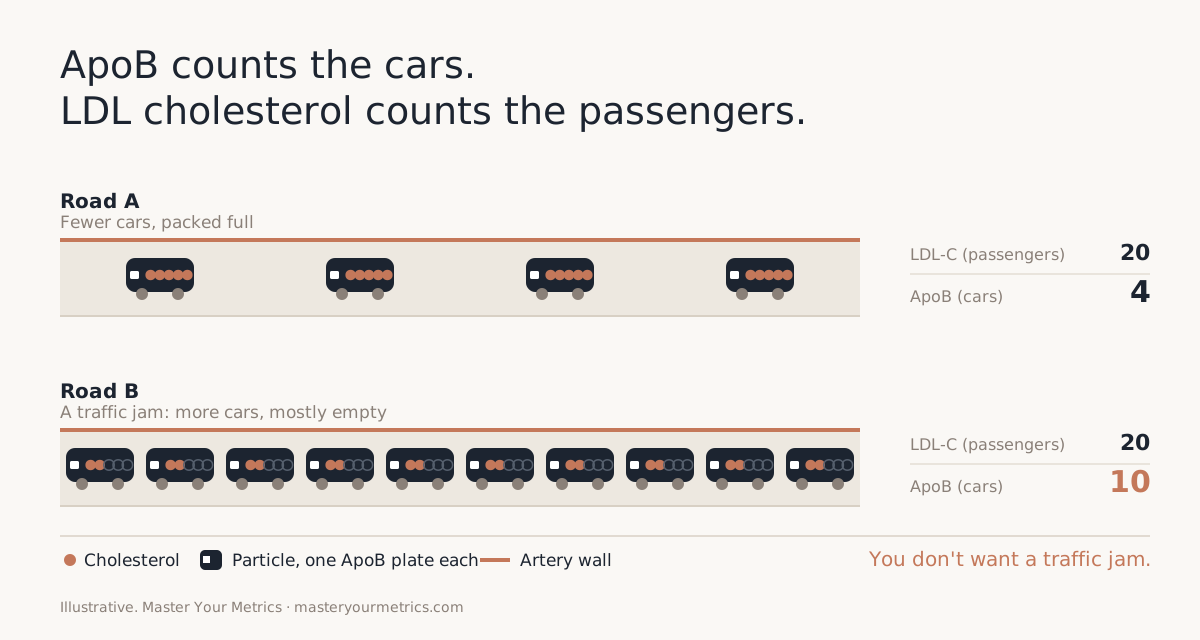
You don't want a traffic jam.
More particles means more chances for one to get stuck in an artery wall and start a plaque. Lowering ApoB clears the road, whatever the cholesterol count says.
Why it matters
Plaque risk tracks the number of particles hitting the artery wall more than the cholesterol they carry. Two people with the same LDL cholesterol can have very different particle counts, and in that mismatch, outcomes follow ApoB.
That mismatch is more common in people with insulin resistance, high triglycerides, or type 2 diabetes, and it can shift for women around menopause, when lipid profiles change.
The 2026 ACC/AHA dyslipidemia guideline is the first US guideline to recommend measuring ApoB. It says ApoB can refine risk once LDL goals are met, especially with high triglycerides, diabetes, or very low LDL.1
Reading your result
Your report will compare you to a population reference range. For ApoB, that range is wider than the goals cardiologists now use, so "in range" is not the same as "on target."
The 2026 guideline sets ApoB goals of under 90, 70, or 55 mg/dL depending on your overall risk, and treats 120 mg/dL or higher as a risk-enhancing result.2 Which goal applies to you is a conversation for your clinician.
ApoB is stable from week to week, which makes it a good marker to trend. A real change from your own baseline tells you more than one result against everyone else's.
Where to test it
| Test | Sample | Cost | MYM review |
|---|---|---|---|
| Own Your LabsSingle test, no membership | Lab draw (Labcorp) | $17.20 | Read review |
| Walk-In LabSingle test, includes $6 physician fee | Lab draw (Quest or Labcorp) | $65 | Not yet reviewed |
| WHOOP Advanced Labs1 test per year, 75+ markers | Lab draw (Quest) | $199/yr | Read review |
| Quest Health Advanced Heart Health PanelOne-time, cash pay, no membership | Lab draw (Quest) | $221 | Not yet reviewed |
| Function HealthAnnual membership, 100+ markers | Lab draw (Quest) | $365/yr | Read review |
| Marek DiagnosticsComprehensive Panel, one-time, ~80 markers | Lab draw (Labcorp) | $495 | Read review |
| InsideTracker UltimateMembership plus one test, up to 54 markers | Lab draw; at-home draw extra | $489 | Read review |
| Hims & Hers LabsAnnual plans, tiers vary | Lab draw (Quest) | Varies by plan | Not yet reviewed |
Prices as of October 2026, before promotions; NY and NJ often cost more.3 Tests without a review are listed from company information, not first-hand testing. If you only want ApoB, a single test costs a fraction of a panel. Your doctor can also order it; ask for it by name.
Last reviewed October 3, 2026. Report an error.
For education only, not medical advice. Talk with a clinician about your results and any treatment decisions.
- 2026 ACC/AHA Multisociety Guideline on the Management of Dyslipidemia, JACC.
- Lp(a) and ApoB in the 2026 dyslipidemia guidelines, HCPLive; key updates summary, UIC Drug Information Group.
- Pricing: Own Your Labs, Walk-In Lab, WHOOP, Quest Health, Function, InsideTracker, InsideTracker Ultimate panel.